Featured

Curriculum planning:KS1 Geography

This is the first in a series of four pieces that were originally featured as guest blogs on http://www.primarytimery.com by Clare Sealy, who I would like to thank for her support with their writing and sharing. I would also like to acknowledge the contributions of the teaching staff at St. Matthias School in Bethnal Green, Andrew Percival (@primarypercival) and the staff at Stanley Road Primary in Oldham, Jon Hutchinson (@jon_hutchinson) at Reach Academy Feltham, and Mark Enser (@EnserMark).

Earlier this year, I was lucky enough to have the opportunity to review my school’s geography and history curriculum, and finalise our schemes of work. As part of this process I did a lot of research on the subject content, and greatly improved my subject knowledge, particularly in geography. While doing so, I’ve thought a lot about what the ideal curriculum would look like – what would be the best way of systematically developing children’s knowledge and skills so that they master the KS2 objectives by the time they leave in Year 6? I’ve written some of my thoughts into these subject guides in the hope that they may help other teachers who are in the process of reviewing their curriculum.

The guides are written on the understanding that your school is teaching the English National Curriculum 2014, and is mainly concerned with how to select content that will ensure you cover the National Curriculum content across each key stage, as well as suggestions as to how the objectives can be grouped and sequenced in order to create a coherent, logically sequenced curriculum. What are you teaching, when, and why?

As the objectives in the Key Stage 1 geography curriculum are mainly fixed and explicit about what children should know and be able to do, the choices that need to be made are mainly regarding the order in which the objectives will be taught, how far they should be broken down into smaller steps, and how many times they should be revisited across the key stage in order to ensure that children remember what they have been taught. (One of the criteria relating to Impact under Quality of Education in the 2019 Education Inspection Framework is that “over the course of study, teaching is designed to help learners to remember in the long term the content they have been taught and to integrate new knowledge into larger concepts.”)

Small area studies

However, there is one objective which requires decisions to be made before you can create a definitive list of the geography that you will be teaching in Key Stage 1:

  • understand geographical similarities and differences through studying the human and physical geography of a small area of the United Kingdom, and of a small area in a contrasting non-European country

First, what will your small area of the UK be? It would seem to make sense to combine this study with the following objective:

  • use simple fieldwork and observational skills to study the geography of their school and its grounds and the key human and physical features of its surrounding environment

In that case, the small area of the UK would be the local area of your school.

Alternatively, you could separate these two objectives, choosing a contrasting area of the UK to study in addition to the surrounding environment of your school. This would be particularly important if your pupils have limited experience of different environments – if your school is in a city, studying a rural or coastal area would be an important addition to your children’s cultural capital.

Secondly, which contrasting non-European country will you choose? There are several possible bases for making this decision:

  1. A location that reflects the background of a significant proportion of the school population or a significant ethnic minority group in the local area. For example, if your school is an inner-city one with a high percentage of Bangladeshi Muslim pupils, studying an agricultural region of Bangladesh could be a good choice.
  2. A location that adds to the pupils’ understanding and appreciation of diversity by providing cultural as well as locational contrast.
  3. A location in a continent that does not feature in Key Stage 2, so choosing it for study in Key Stage 1 will ensure that your pupils have sufficient understanding of a range of countries around the world. I would suggest waiting until you have decided on which locations in Europe and North or South America you will teach in Key Stage 2, as well as the history units you will be teaching. Plot these locations on a world map – is there a continent or country that is not represented, but which you feel it is important for the children in your setting to have experience of?
  4. A location that links to an area of study in a different subject – a history topic or a text that is being used in English. Just be careful that if you make the decision for this reason, the location you select has sufficient learning potential (you’re not sacrificing the geography for the sake of the link).

Whichever reasoning you base your decision on, make sure that you choose an area which includes the physical and human features that are studied in this key stage, since the original objective specifies comparing physical and human geography.

Physical features: beach, cliff, coast, forest, hill, mountain, sea, ocean, river, soil, valley, vegetation, season and weather

Human features: city, town, village, factory, farm, house, office, port, harbour and shop

Suggestions about sequencing

Now you know what needs to be taught, how will you organise this into units of work? What is a logical way in which to sequence these units?

  • identify seasonal and daily weather patterns in the United Kingdom and the location of hot and cold areas of the world in relation to the Equator and the North and South Poles

The first part of this objective (seasonal weather patterns), links to the Year 1 science objectives on seasonal change, which include the requirement to observe and describe weather associated with the seasons, so it would make sense to teach them together. Consider organising this into four short blocks across the year – one for each season at the appropriate time of year – so that children can experience what they are learning about first hand. Remember that there’s a second half to this objective which will need to be slotted in later.

When sequencing the remaining objectives, it would seem to make sense to start with those focused on the UK in Year 1, and gradually widen out to cover the more abstract world locational knowledge in Year 2 (although this sequence is not essential). The following is a suggestion as to how to split the objectives between Year 1 and Year 2:

Year 1 (in no particular order)

  • understand geographical similarities and differences through studying the human and physical geography of a small area of the United Kingdom
  • name and locate the four countries and capital cities of the United Kingdom and its surrounding seas
  • use world maps, atlases and globes to identify the United Kingdom and its countries
  • Identify characteristics of the four countries and capital cities of the United Kingdom

Year 2 (in no particular order)

Of course there are many ways of grouping the objectives into units, which will depend on the location of your school, the backgrounds of your pupils and the history units you choose to teach.  Also, keeping in mind the need for children to regularly revisit and have opportunities for retrieval practice, it will be important to continue to reference and build on knowledge initially taught in Year 1, throughout Year 2. You may also decide to introduce children to the seven continents and five oceans in Year 1, or to split the study of the school and its grounds into two units, with more in depth fieldwork taking place in Year 2 when children have developed a better understanding of measurement and statistics.

Geographical skills and fieldwork

Geographical skills and fieldwork should be included in each unit, with the level of challenge gradually increasing throughout the key stage. As with the locational knowledge objectives, it is vital that prior learning is regularly revisited and built on, so there should be several opportunities throughout both Year 1 and Year 2 for children to practice using compass points to describe locations on maps for example.

When introducing new human and physical features, and new locations, following this routine would be a good way of ensuring that children’s map skills are developed well:

  1. Identify in photographs
  2. Visit in real life if possible
  3. Identify in aerial photographs
  4. Identify on a map (OS map symbols)
  5. Locate on a map of the UK or the world
  6. Describe its location in relation to other places or features studied
  7. Locate in an atlas

This sequence could be gradually developed throughout the key stage, so that by the end of Year 2 children are able to do all of the above confidently.

The unit on seasonal weather patterns provides a good opportunity for developing fieldwork skills by recording temperatures and measuring rainfall. Additionally, the unit of study of the school grounds and the surrounding environment should mainly consist of fieldwork. If you have chosen to study a contrasting area of the UK as well as the school’s local area, additional fieldwork could be carried out on a visit.

Opportunities for retrieval practice

Including an ‘orientation lesson’, which looks at the location of places that are important, using the list of activities above to explore it fully, at the start of each history unit, could be a useful way of providing children with opportunities to revise previous locational knowledge, use their geographical skills, and introduce them to a wider variety of countries.

Additionally, looking carefully at the texts you have chosen to teach from a geographical perspective could provide some useful opportunities. This may be using ‘orientation lessons’ as described above, or it may be identifying human and physical features in illustrations or using knowledge to create a clear picture of a setting. It’s worth noting that while vegetation is on the list of physical features, if plants or trees have been planted by people, such as flowerbeds in a park, they are in fact human features. Illustrations or mentions of different features in stories could help to provide children with plenty of examples (and non-examples) so that they develop a really secure understanding.
High yield vocabulary – Sacrifice

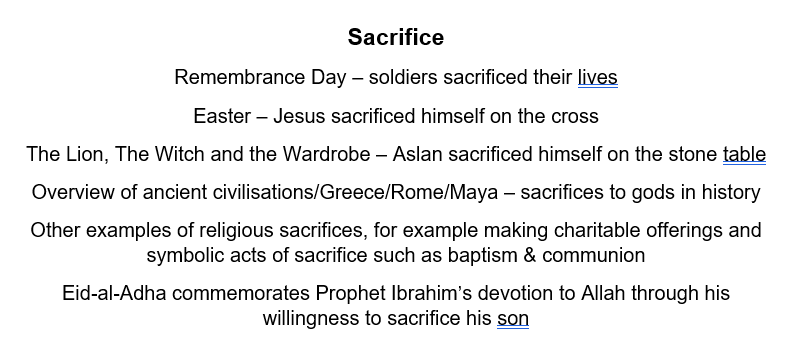
Looking at the Remembrance Day poppies on lamp posts led me to reflect on the number of times children may come across the word sacrifice during their primary school years. It’s a concept that spans several subjects, creating diagonal links as explained by Clare Sealy here1 . So I thought I’d start a new series of mini-blogs highlighting some of these high yield concepts and how you can track them throughout your school’s curriculum. Please let me know if I’ve missed any links and I’ll add them in. They’re in no particular order.

  1. https://primarytimery.com/2017/10/28/the-3d-curriculum-that-promotes-remembering/ ↩︎

Building Understanding of Coasts In KS1 & KS2

One of the reasons I’m so passionate about building a high-quality history and geography curriculum is the positive impact that building a wide vocabulary has on children’s achievement, particularly in English. It’s important to deliberately plan the development of this, rather than leaving it to chance[1]. Coasts is an area I’ve thought about a lot, as there’s a significant amount of tricky vocabulary linked to this topic, which can be difficult for children to understand, particularly if they rarely visit the seaside. In this blog I set out how knowledge of coasts progresses throughout KS1 & 2, and some suggestions as to how this can be effectively embedded within the curriculum, including text suggestions.

Key Stage One

In KS1, children should be taught the following words – beach, cliff, coast, port & harbour[2]. In order to ensure that children secure these words in their long-term memory, it’s important that they experience them several times throughout Years 1 & 2, in different contexts[3]. There are many excellent picture books with seaside settings – a personal favourite is Jack & Nancy by Quentin Blake[4]. Does your KS1 English curriculum include texts containing these words? If not, it’s worth considering whether any could be added, either as part of English lessons or as storytime reads. If teachers are aware of the reasons for including these texts, they can ensure to briefly discuss the above words and the relevant illustrations so that they are emphasised to the children.

Some valuable geography activities would be including coastal features, such as the White Cliffs of Dover and the Giant’s Causeway, when learning about the countries, capital cities and seas of the UK, and asking children to trace the coastline with their finger each time they use a UK or world map. You could also explore the ports at each of the UK’s capital cities, and the different types of ship that use ports and harbours. In addition to including this vocabulary in geography units where appropriate, a good opportunity to further reinforce it would be including coastal habitats during the Year 2 Living Things and their Habitats science unit. If you teach a history topic on changes in transport over time, you could include ships and ports here too.

Key Stage Two

Before I look more closely at the teaching of coasts in KS2, I think it would be useful to summarise what is included in the KS3 NC.

KS3 Geography NC:

Pupils should be taught to understand, through the use of detailed place-based exemplars at a variety of scales, the key processes in rocks, weathering and soils and coasts

So coastal processes are taught in KS3 – this is important to note, as we must be wary of accidentally encroaching on the KS3 curriculum in KS2, causing difficulties with secondary transition and taking up time in our already packed timetables unnecessarily. If you’d like to find out more about what is taught in KS3, the below link could be a good place to start:

Coasts – KS3 Geography – BBC Bitesize

If we’re not teaching coastal processes, what should we be teaching in KS2? Here are the relevant NC objectives.

KS2 Geography NC:

Pupils should be taught to name and locate key topographical features of the United Kingdom, including hills, mountains, coasts and rivers

Pupils should be taught to describe and understand key aspects of physical geography, including rivers

Pupils should be taught to describe and understand key aspects of human geography, including types of settlement and land use, economic activity including trade links and the distribution of natural resources including energy

Note that the only explicit mention of coasts in the National Curriculum is in the first objective, which refers to naming and locating coasts of the United Kingdom. However, coasts and related vocabulary will likely be included in the teaching of the other objectives listed above; links explained in further detail below:

  • Naming and locating coasts (and coastal features such as cliffs, caves and peninsulas) should be included in all UK geography units.
  • When learning about rivers, the journey of a river ends at the sea, with estuaries being a coastal feature. Additionally, you are likely to introduce erosion when learning about rivers – while this does not need to be explicitly taught in geography relating to coasts, it’s useful preparation for KS3. You may well also include erosion when teaching children about sedimentary rocks in Year 3.
  • When learning about land use and economic activity, children should learn about seaside tourism, leisure, industries such as the fishing industry and transport (including the role of docks in foreign travel for example).
  • When learning about trade, children should learn about the role of ships and ports. If they have learnt about changes in transport over time in KS1, this is a useful link.
  • When learning about sources of energy, in particular renewable energy, children should learn about the use of wind turbines.

Knowledge of coasts can also be developed through the following geography units:

  • During studies of regions in the UK, Europe and North or South America, and when locating world countries (with a focus on Europe, North and South America) locate the coastlines of the countries encountered during atlas activities. Finding each country in the atlas and asking the children to trace the coastline with their finger is a good routine to develop every time you learn about a new country. Aidan Severs describes the approach of revisiting prior knowledge through a number of key questions every time you learn about a new place further in this blog:

Geography: Key Questions To Ask When Learning About A Place (aidansevers.com)

  • Learning about significant coastal features in Europe, North & South America, particularly where these link to other areas of the curriculum eg. Mont St. Michel, the Norwegian fjords or the Galapagos Islands.

Where there are links to topics in other subjects, these should also be capitalised upon. For example, when learning about ancient Greece, knowledge of vocabulary such as archipelago and islands will be relevant, as well as understanding the importance of fishing to the ancient Greeks.

Finally, I think it’s important we consider the vocabulary our children will need to develop in order to become successful readers, and to adequately prepare them for the secondary curriculum. I’ve created a (probably not exhaustive) list of words I would suggest children should recognise, understand and use by the end of Year 6. Please let me know if you think I’ve missed anything important.

Physical features – ocean, sea, coast, beach, shore, cliff, sand dune, rockpool, cave, archipelago, island, headland, peninsula, fjord, bay, estuary, coastline

Human features – harbour, port, quay, dock, wharf, quayside, pier, promenade, breakwater, sea wall, sea front, causeway

Adjectives – coastal, maritime, marine

Children should also be able to spell the following words:

Year 3/4 spelling list – island

Year 5/6 spelling list – leisure, yacht

To achieve this, in addition to including mentions of coasts in the units above, you could plan a series of reading activities designed to build vocabulary throughout the key stage. I’ve described a variety of ways in which this could be done in my previous post on using reading to build knowledge across the curriculum[5]. As I mentioned in relation to the KS1 stories, if teachers are aware of the vocabulary they are aiming to develop, they can draw attention to the relevant words while reading these texts. Here are some of my particular favourites, but I’m sure you can think of many more:

Years 3 & 4 – Arthur and the Golden Rope, The Mousehole Cat, When Jessie Came Across The Sea

Years 5 & 6 – Room 13, The Giant’s Necklace, Tentacle Boy

Coasts epic booklist.docx – Google Docs A selection of free books to read on http://www.getepic.com, both fiction and non-fiction.


[1] See Andrew Percival’s excellent explanation of prototype theory in relation to building a secure understanding of key concepts here Microsoft Word – Banishing misconceptions with prototype theory.docx (weebly.com)

[2] KS1 Geography NC:

Pupils should be taught to use basic geographical vocabulary to refer to key physical features, including beach, cliff, coast

Pupils should be taught to use basic geographical vocabulary to refer to key human features, including port & harbour

[3] As described in this series of blogs https://mrssteaches.school.blog/2020/02/01/primary-history-geography-curriculum-decision-making-part-1/

[4] Jack and Nancy – The Teachers’ Collection – Stories to support curriculum planning (theteacherscollection.com)

[5] https://mrssteaches.school.blog/2023/04/10/using-reading-to-build-knowledge-across-the-curriculum/

Using Reading To Build Knowledge Across The Curriculum

There’s a lot of focus on teaching reading through challenging novels, which is really important and valuable. But what about non-fiction? Do you have a balance between fiction and non-fiction in your reading lessons?*

In this post, I will break down my ideas, specifically those involving reading and frequent short bursts of retrieval, from my Curriculum Decisions Part 2 post, so if you haven’t already read that one (or, like me, not for a while!) I’d recommend having a look at it first. https://mrssteaches.school.blog/2020/02/05/history-geography-curriculum-decisions-for-class-teachers-part-2/

I’ve recently created book lists for a variety of history, geography and science topics – all books are free to read on www.getepic.com at any time for teachers, and you can create pupil accounts for reading on individual devices during school hours. 24 lists now at this link https://drive.google.com/drive/folders/1HCyTPRjgYgJCytW5-mgzvI3kh1bWTSDo?usp=share_link

Reading through all these great non-fiction books made me think about how these could be used effectively to build knowledge across the curriculum. Obviously non-fiction texts can be really helpful to use during the subject lessons, either to assist with delivering the new content by showing texts on the board, or for children to reinforce what they have learnt through independent reading. However, there are other ways in which non-fiction texts can be used to strengthen knowledge. In this post, I will explain some strategies for class teachers, plus something to consider for subject/curriculum leads, and illustrate them with examples.

Strategies for class teachers:

  1. Pre-reading

To prime the children for new learning, select one or two fairly simple and short books to read as a class before you teach the topic. These could be read to the whole class during story time, or could be used for one or two reading lessons so you have the opportunity to explore the text in depth. For example, a good way of preparing children for a new history topic would be to read a couple of books about a linked country beforehand, or for science topics, reading a book that recaps prior knowledge from a previous year group.

Example: Roman Britain

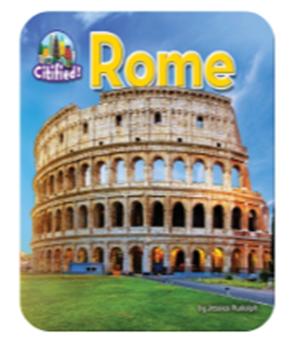
Prior to teaching about the impact of the Roman Empire on Britain, read these books on Italy and Rome. Talking and thinking about these books will ensure that all children have a basic level of knowledge on which to base their learning when you start the topic.

2. Reading to revisit knowledge

Fairly soon after the topic, plan a sequence of reading lessons based around a text which covers the main learning you covered within that topic. This is a great way to both revisit learning to secure it in long term memory, and give all children the opportunity to access a more challenging text, since they already have good knowledge of the subject.

Example:

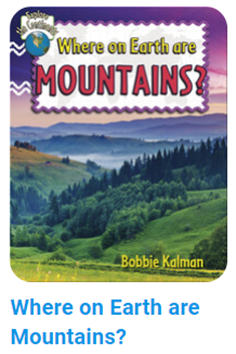
This book is excellent for reinforcing learning about mountains as it provides an excellent summary of the key learning – what mountains are, how they are formed, and a variety of mountains around the world (helpful for building locational knowledge as well as the specific knowledge about mountains). It would also be a useful text for learning about features of information texts, and I’d recommend selecting particular pages for modelling deconstructing the text and for children to answer questions about. I’d recommend spending a week focusing on the book in reading lessons the term after you learnt about mountains in geography.

3. Reading to deepen knowledge

Similar to pre-reading, this can be done in one of two ways – either reading a fairly short book as a whole class in story time, or using a more challenging book as a focus for a sequence of reading lessons.

Example 1: Whole class book

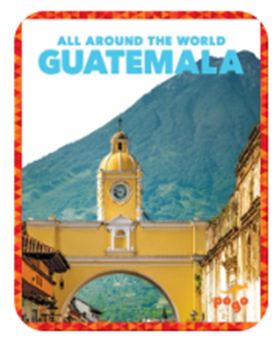
After learning about the Maya in history, you could read and discuss this book about Guatemala as a class. It’s a fairly simple book for KS2 children, but there are lots of interesting facts that link to the Maya, building on children’s knowledge of the history of the Maya while finding out more about how that influences people’s lives in modern day Guatemala. There are also opportunities to make links to the geography curriculum through reading this book.

Example 2: Reading lessons

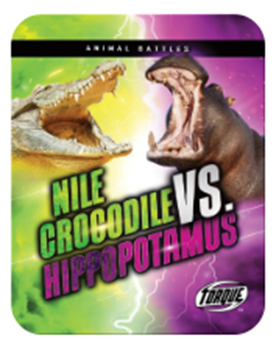
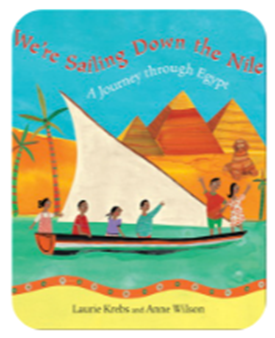
After learning about Ancient Egypt in history, plan a sequence of reading lessons around this book on Nile crocodiles and the hippopotamus, which deepens children’s knowledge of the River Nile in a different way through learning more about the animals that live there. This is also a great way to build on knowledge of animals from science lessons. You could start by reading ‘We’re Sailing Down the Nile’ and stopping at each new location for children to recall as many facts as they can on that subject (mummies, pyramids, farming etc) to revisit prior learning before starting to explore the new book. Nile Crocodile vs Hippopotamus gives opportunities for exploring the different ways that information can be presented, and would be a great stimulus for children writing their own information texts about animals.

Strategies for subject/curriculum leads:

  1. Pre-reading

As a subject or curriculum lead, you could support teachers to deliver pre-reading activities with their classes by identifying suggested texts for them to use. I’ve focused on the selection of books from Epic, but this strategy could also be used with websites, articles, actual books or pages from atlases or textbooks. Picture books containing key vocabulary can also be really useful here, as I explain in my Curriculum Decisions post (link above).

You could also build pre-reading into prior year groups’ reading curriculum. For example, if the impact of the Romans on Britain is taught in Year 4 in your school, you could select a couple of books about Italy and Rome for Year 3 to read. This would be particularly useful for topics taught in the autumn term as opportunities for pre-reading within the same academic year will obviously be limited for those topics.

2. Reading to revisit and deepen knowledge

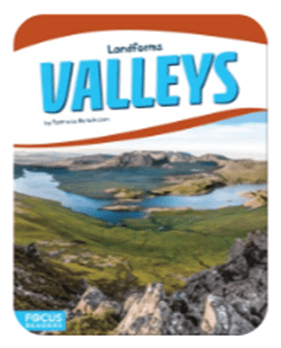
As with pre-reading, selecting texts that recap the key knowledge from the topic or build on it in a different context would support teachers with planning these opportunities for their class. Again, this could be within the same academic year, or you could suggest texts to be used in subsequent year groups in order to build on certain topics. This would be particularly helpful for topics that have fewer cross-curricular links, to ensure they are remembered, or where knowledge is particularly important to remember in depth. For example, if children have learnt about rocks in Year 3 science, and then rivers in Year 4 geography, this series of books on landforms would be an excellent way to revisit and link those topics in Year 5 during reading lessons.

*Apart from the other benefits stated above, this is really important as children often struggle with the level of formality required in non-fiction writing when they reach Upper KS2.

Choosing fiction texts to use with your class

One of the most frequent requests for help across primary education social media is with choices of fiction text. I often find these difficult to answer, because there are so many factors to take into consideration when making these choices. Reading is an extremely powerful tool that can be used for a variety of different purposes (in addition to stories that are read for pleasure, which is of course valuable in itself). In this post, I will outline my views on how and why texts can be chosen. I’m happy to hear other views and suggestions on this topic – any conversation about books is a valuable one.

First, for what purpose are you going to use the text? Here are some possible reasons, although this isn’t intended to be an exhaustive list:

To read for pleasure

To support progress in reading

To inspire writing

To provide additional exposures to key vocabulary to build children’s schema* for a particular word

To enrich children’s learning of a particular topic

Depending on your purpose, different types of text and ways of sharing them may be the most appropriate way of achieving your main aim:

Novels read in story time – these are likely to be chosen based on children’s interests to read for pleasure, or to introduce children to authors and texts they may not choose for themselves or be able to read independently yet.

Novels to use in English lessons – likely to involve complex themes and vocabulary to explore in more depth, and/or have the potential to inspire a variety of forms of writing.

Short stories or picture books to study in English – as above, may involve complex themes and vocabulary to explore in depth, have the potential to inspire writing, and/or provide a good model for children to imitate.

One-off short stories or picture books read in story time – likely to be the best choice if you want to pre-teach a particular word or concept (eg. Francesca Sanna’s The Journey for the concept of seeking refuge), or add context to a particular topic (eg. The Pebble In My Pocket when teaching rocks in science). The one or two short sessions spent reading and discussing these books can add a lot of value to children’s learning and vocabulary development across the curriculum.

Should I choose a novel because it links to my geography or history topic?

This depends on the particular novel, and the reason(s) for the choice. Is it important enough for the children to have read that you would choose it even if you were not teaching that particular historical period? What does it add to the children’s progress in English?  It’s important to be sure that the text is of a high enough quality to be chosen over the many other excellent children’s books that are available, but that may not be set in a particular period in history, rather than choosing solely based on the link.

I’d also suggest considering the timing in relation to your teaching – if the story is highly dependent on historical context, I’d suggest reading it in the term following your teaching of that historical period, so that the children have a fuller understanding of the context prior to starting the novel. (eg. Who Let The Gods Out – knowledge of the various Greek gods and settings is essential to be able to properly follow the story. It’s a fantastic book and a valuable read in lots of ways, but maybe best after learning about the Greeks, rather than alongside)

Or if it’s introducing children to worlds and concepts that will help them access the academic content, maybe it could be read beforehand? (eg. The Lion, The Witch and The Wardrobe provides a brief introduction to evacuation, but an in depth knowledge of WWII is not key to understanding the story, so it could be read prior to learning about WWII in history)

If you’re teaching a geography topic such as mountains, how much does a novel set in mountains really enhance the geography teaching? Might two or three well-chosen picture books do the same job just as well, allowing you to read another novel instead?

Of course there’s no reason why children shouldn’t read historical novels or those with mountain/river/rainforest settings. But if this is always the basis for selecting the text, are the children being exposed to a sufficiently broad range of challenging texts? Why would we exclude the huge range of brilliant books that don’t necessarily link to a particular topic?

Which types of text complement history topics?

If you’re looking for ways of enriching children’s knowledge of a historical period through world-building, I’d start with stories from that period. For example, reading a wide range of myths from that period – do your children know a variety of Egyptian, Roman, Greek and Norse myths? When learning about ancient civilisations, The Epic of Gilgamesh is valuable as the first ever written story (and the Gilgamesh Trilogy picture books by Ludmila Zeman are excellent stories for children to explore and to inspire writing). Stories of real and legendary figures provide children with great insights into what was important to people in a particular period, for example Viking sagas, or the legend of King Arthur.

You may also want to consider reading stories that develop children’s understanding of key historical concepts, but are not actually set in the periods you are studying. For example, The Legend of Podkin One Ear provides a great opportunity to further explore the concepts of monarchy and inheritance, despite being set in another world.

Which types of text complement geography topics?

Again, myths can really enrich learning about a particular country or region. Reading myths from as many countries as possible exposes children to a wide variety of story structures, and often unusual vocabulary and ideas which they may not come across in their own reading. As they are short, many more of these could be read, potentially adding far more value than a novel set in the rainforest.

As I’ve already described above, picture books can be really effective for pre-teaching vocabulary. There are so many high quality non-fiction texts, that it may be more valuable to spend time reading a wider selection of these to enhance a geography topic.

What are you missing out on if you only choose texts that link to a topic?

For a start, there are many excellent books that don’t link to any of the commonly taught geography and history topics. It’s important to ensure that children read books with a wide range of themes, by a diverse range of authors, and that every child has a chance to see themselves represented in the books they read across the primary phase.

There’s a lot of emphasis on reading a wide variety of fairytales, traditional stories, myths & legends in the National Curriculum. If text choices were made based on links to a topic, it would be easy for fairytales and traditional stories to be marginalised in the English curriculum.

So how should you choose texts?

Think first about which texts will best promote children’s progress in English, taking into account the requirements of the National Curriculum. Select texts based on how well they build children’s vocabulary and understanding of key themes, as well as increasing complexity as they progress through school. Once these have been selected, if there are links across the curriculum they can be made, but the links are not limiting the curriculum by driving all the choices of text.

*EEF blog: Working with schemas and why it matters to teachers | EEF (educationendowmentfoundation.org.uk)  See this excellent explanation of developing schemata by @hydeh_rose

Why should you teach an overview of ancient civilisations?

  • the achievements of the earliest civilizations – an overview of where and when the first civilizations appeared and a depth study of one of the following: Ancient Sumer; The Indus Valley; Ancient Egypt; The Shang Dynasty of Ancient China

An element of the KS2 History National Curriculum that is often forgotten is the overview of ancient civilisations. This is because the above bullet point is misleading, in that it consists of two separate parts: the overview and the depth study. It’s easy to just choose an option for the depth study and forget about the overview (I did this myself when the 2014 NC was first introduced), but there’s some really rich learning that makes it worthwhile to devote some time to this topic, rather than just tacking a lesson or two onto the depth study.

As with most topics, there’s no one “correct” way to teach this. I’m going to describe my first attempt in the hope that it will be helpful, but if you think I’ve missed something or have a different approach in your school, please let me know. How it’s approached will also depend on the year group it’s allocated to, and where it fits in the sequence of your history curriculum. My class are Year 5, and have already covered all of the British history, plus ancient Greece. They already knew where Mesopotamia was after reading Varjak Paw in Year 4, and we had prepared for the topic by reading and discussing the relevant maps from Prisoners of Geography.

I think there are a variety of different ways that the overview study could be slotted into the sequence, all of which could work well, but my preference would be that it was taught after at least one of the other ancient history topics, so that children have some depth of knowledge to provide context for the new learning. It’s also extremely useful if the children have already learnt about rivers in geography, so that they have an understanding of the uses of rivers, particularly in farming and transport.

I chose to teach an overview of the four civilisations named in the National Curriculum – Ancient Sumer, The Indus Valley, Ancient Egypt and the Shang Dynasty, as well as the Ancient Maya. I chose to start with Ancient Egypt, as I knew that my class already had some knowledge and interest in it, whereas they hadn’t heard of the other three civilisations. Others might advocate for introducing the civilisations in chronological order of when they first appeared, but I chose to use the more familiar stories of ancient Egypt as a hook.

Content

First I told the story of Howard Carter discovering Tutankhamen’s tomb. This led naturally into a discussion of the monarchy (and we digressed from ancient Egypt as I gave examples of other child monarchs, regencies and civil wars in response to the children’s questions). I then gave a brief overview of all four civilisations, anchoring them in a story, with a photo of a monument and/or significant artefact, where and when they appeared. We returned to this powerpoint throughout the unit and it was a good way of making sure the children could identify each different civilisation without too much confusion.

I then taught three lessons on ancient Egypt, followed by two on each of the other civilisations. I found that each new civilisation was easier for children to understand, and we moved through the content more quickly with children being able to access the reading and discuss sources more independently. The very obvious similarities and themes running through the whole study were really powerful. I focused on the following key features and concepts: ruler & government; towns/cities/states; agriculture & irrigation; religion & monuments; writing; major achievements; use of natural resources & trade; war & peace. and reasons for decline (climate change, conquest, overthrowing the monarch). I also emphasised any mysteries (mainly in the Indus Valley – their written code has never been cracked, why they had no monuments, and why the civilisation declined – as well as the reason that the cities of the Maya were abandoned).

This study obviously lends itself to identifying similarity and difference between civilisations in different parts of the world – comparing those included in the topic, but also making links to the children’s prior knowledge of ancient Greece and Rome. It’s also really useful for developing an understanding of chronology, focusing on what was happening at the same time in different places, as well as the chronology within each of the different periods. It was interesting watching the children gradually coming to the conclusion that Britain was not anywhere near as advanced as these other parts of the world, and building a really strong understanding of how advances in agriculture enabled populations to grow and new discoveries to be made.

Resources

As mentioned above, Prisoners of Geography was useful for providing an overview of the different parts of the world in which these civilisations arose: their physical features, natural resources and trade links. We also used atlases to identify the specific location of each civilisation.

If teaching the unit in Upper KS2, the introduction to The Silk Roads is an excellent text to use alongside the children’s learning in history. It helps the children to understand the links between the different civilisations, rather than falling into the trap of seeing each as an isolated bubble. It’s also excellent for world-building, as the rich vocabulary really helps children to visualize the ancient world. I selected particular words and sentences which we discussed in depth – we had a half hour discussion just about the sentence ‘Merchandise was carried by caravans of hardy camels’. We also had some discussion of the differences between trade in the ancient world and now based on this text, making links to learning in geography.

Stories can provide lots of enrichment in this topic – we read Marcia Williams’ Ancient Egypt and the Gilgamesh Trilogy by Ludmila Zeman (ancient Sumer).

The British Museum has some excellent resources – as well as photos and descriptions of artefacts, there are websites on ancient Egypt and Sumer:

Introduction (ancientegypt.co.uk)

Mesopotamia – The British Museum

Finally, I used the following books from www.getepic.com:

Tools and Treasures series (Ancient Egypt, China, Mesopotamia & Maya – be careful because in many of these only the first chapter is really useful, as they then start mixing facts and artefacts from different periods of time which is a bit confusing)

Ancient Worlds Inside Out (Egypt & Mesopotamia)

I hope this has given you some ideas as to how you might implement this topic. Please contact me on Twitter (@MrsSTeaches) or through the comments with any suggestions, or if you have questions about how this could be adapted for different year groups.

How can curiosity, pupil choice and independent thinking be developed as part of a knowledge-rich curriculum?

A criticism of schools choosing to teach a knowledge-rich curriculum is that they are treating children like robots, who they bombard with dry facts, rather than developing children’s curiosity. It is often assumed that in these schools, children will have no say in what they are learning and will lack independence of thought, as teachers are simply filling their heads with information which they must learn by heart and parrot back. But as a teacher in such a school, this couldn’t be further from the truth.

I’m going to outline some of the ways in which I develop children’s curiosity and allow them to have input into what they are learning, as I feel that these strategies play an important part in keeping children engaged with their learning. I expect that you will already be familiar with these ideas – the purpose of this blog is to explain how they can be used while still having a focus on teaching knowledge and ensuring children remember what they have been taught. These are my personal strategies and I’m not claiming to represent all knowledge-rich classrooms, just to provide a case study of how they might look in practice.

One of the most important things I do from the very beginning of each school year is encourage my class to ask lots of questions. I regularly talk to the children about why it’s so important to ask questions, and praise children for doing so. One of the things that struck me when I started teaching in a knowledge-rich school was how much higher the quality of the children’s questions was when it was based on a solid background of knowledge. Their use of full sentences, key vocabulary and learning from previous years when constructing questions really impressed (and continues to impress) me – and this is no criticism of my previous school, as we had done a lot of work on the curriculum, encouraging children to ask questions and be independent learners. It was just even stronger than what I had been used to.

At the end of a unit, my class will be excited about what we are going to learn next. When they find out what the new unit is going to be, they will ask questions about the specific content straightaway. One of the ways I help children to feel as if they have some control over what they are learning is that if they ask a question I know I’m going to answer later in the unit, I tell them that we will be learning that later, and then refer back to them by name at the point where the answer arises. Eg. Mary, you asked why Roman roads needed to be straight, and now we’re going to find out the answer to that.

When I’m introducing the new unit, and fielding lots of excited questions, I explain why it’s interesting, how it links to prior learning, why it’s useful, and what I particularly enjoy about it. Knowledge is fascinating, and the teacher being passionate about the learning transfers that passion to the children. Children are excited to learn what happens next even if they haven’t chosen the topic themselves. If equipment is to be used, I will allow them some time to explore and have fun with it before starting – it’s a good assessment tool at the start of the unit and gives an opportunity for me to discuss children’s prior learning with them individually, as well as developing their curiosity about what the equipment is used for.

If children ask particularly good questions, or express interest in a particular aspect of the topic, I adjust planning to include these if it’s possible without distracting from the core content of the unit. Again, I make a mental note of which children were interested in these areas and refer to them by name, or mention that lots of children showed interest in the area we are going to learn about next. eg. I know you were all really interested in Mary Anning on Horrible Histories – today we’re going to learn more about her. This is a really simple way of harnessing children’s natural enthusiasm – I’m sure it’s commonly used in most classrooms and it’s possible to continue to do so, whilst the teacher retains an overview of the knowledge they need to teach during the unit, how long that will take, and how much time there is to add extra details or spend slightly longer on an area of particular interest.

As well as asking questions, I encourage my class to make observations and point out links with prior learning or other areas of the curriculum. This helps them to apply what they have learnt in different contexts, as well as being a good strategy for retrieval practice. They are usually delighted with themselves that they’ve spotted a link which generates excitement and curiosity in the rest of the class who want to see if they can find one too. I use the following displays to make links explicit:

  • A book links display (idea borrowed from Sophie Bartlett @_MissieBee)
  • A curriculum concepts display

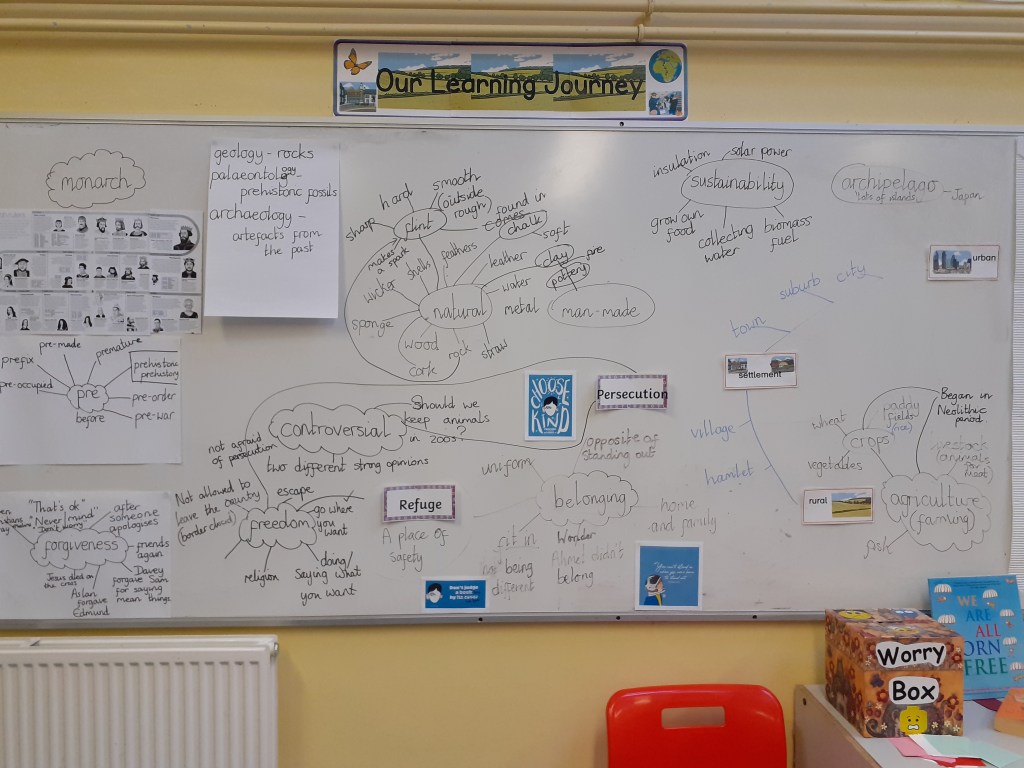
The ideas on the curriculum concepts display are all generated by the children – they discuss what each word means to them and any examples they can think of in pairs, then I scribe their suggestions onto the board. If I mention a concept that links to one on the board during a lesson, I will point it out and add the example. If I mention a word that’s on the board, the children’s heads will all snap in that direction and when they’re writing they try to include any vocabulary that’s relevant to the topic. I think they have a connection to the board because it uses their own examples and definitions so it connects the knew knowledge with where they currently are. Sometimes I ask about a word and find that no one really has a clear idea what it means, so I can adapt my planning to include more input on that as a result – it’s a good method of formative assessment as well.

During the unit, if children ask questions that I don’t have time to address in depth, I will praise the question and encourage them to read and find out more about that topic in their own time. I might make suggestions for additional reading – for example, we often read selected pages from a book on www.getepic.com during a lesson, and I encourage the children to read the rest of the book. I have regular non-fiction reading sessions, where the children are allowed to choose from a selection of books I specify. This might be free choice from all the non-fiction books in the classroom and library, or just those on a particular topic linked to what we have been learning. For example, when we learnt about rocks and soils, we had a session where every children chose a book about rocks, had some reading time, shared the most interesting thing they had found out, then swapped books. This is a great way of allowing them freedom to follow their interests at the same time as promoting reading non-fiction for pleasure.

When we write non-fiction, I often allow the children a choice of what to write about within certain guidelines. This might include doing some guided research so that they can find out more detail about an area in which they are particularly interested (eg. writing a non-chronological report about a planet of their choice). Or I may give them the option of using content from a particular lesson, or doing extra research at home if they want to write about a different topic. Again, I’m sure this is something that happens in most classrooms, but it’s worth pointing out that explicit teaching of certain grammatical content and punctuation doesn’t preclude children from choosing the content of the writing in which they apply what they have learnt.

At various points throughout the term, I ask the children what they have found interesting, which lessons they enjoyed and why, and what they would still like to learn. Sometimes this is by sharing with the whole class, and sometimes I ask them to answer in writing. They know I will use this information to plan what we learn next and make sure I’m doing the best I can to help them learn. Although the core content of the lessons may have already been decided, this doesn’t mean that I don’t adapt my teaching based on feedback from the children (in fact I am constantly doing so), and doesn’t mean that there isn’t room to add content in based on children’s requests. They may have already asked these questions, but sometimes giving a more formal opportunity for them to give their feedback raises points I haven’t thought of before. The children know that I value their ideas and will act on them where possible, so they are able to have input into their learning while I, as the teacher, remain the expert who has an overview of the big picture of each subject and the whole academic year.

At the end of a unit, I include a trip or visitor wherever possible. Knowing that this is coming gives rise to lots more questions, and the children are motivated to learn as much as they can in the preceding lessons so that they are prepared to answer questions. They love applying their knowledge in a new context (a topic I wrote about here Curriculum decisions – Using knowledge to create moments of joy – MrsSTeaches on Curriculum (school.blog)).

I aim to create a classroom where there is a buzz around learning, the children are active participants, there are opportunities to question, observe and make connections, and they have freedom to follow their interests. I also strongly believe that a curriculum that is explicit about the knowledge children will be taught, and teaching that includes strategies to ensure children remember this knowledge, are vitally important due to the evidence that shows how knowledge helps children from all backgrounds make good progress (for example, the evidence about how background knowledge affects reading comprehension*). I hope that with this blog, I’ve shown that the two are not mutually exclusive.

*Such as that in Chapter 2 of Willingham’s ‘Why Don’t Students Like School?’

History & geography curriculum decisions (Part 4)

Last year, in the first three parts of this series of posts, I described a variety of strategies that could be used by both class teachers and school leaders in order to increase the number of exposures to key concepts and vocabulary children experience. I’ve also explained how I would use cross-curricular links to strengthen children’s learning in my series of posts about specific topics.

I’ve recently been lucky enough to be invited to talk about primary geography and history with Neil Almond (@Mr_AlmondED), on Kieran Mackle’s (@Kieran_M_Ed) fantastic new podcast Thinking Deeply About Primary Education. The episodes will be part of the second season, which hasn’t yet been released, but you can find the first season here if you haven’t already (6) Thinking Deeply about Primary Mathematics – YouTube. During the course of our discussion on history, I realised that there’s another strategy I’ve used to develop cross-curricular links, which I omitted from my original list of strategies, and thought was worth adding.

An important aim of the history curriculum is developing a secure understanding of chronology. In KS1, children should know where the people and events they study fit within a chronological framework, and by the end of KS2, children should have developed a chronologically secure understanding of British, local and world history (although obviously not all of it, just the specific parts we are required to teach!). There has been a lot of discussion on Twitter about the best way of achieving this – is it through teaching history units in chronological order? What other strategies should we use to support chronological understanding? Stuart Tiffany (@Mr_S_Tiffany) has done lots of work on this recently if you’d like to look into it further. In this blog, I’m going to explore a few simple strategies that I’ve used to develop chronological understanding in my class, in addition to my normal history lessons, as a form of retrieval practice.

Put simply, what I did was use any spare few minutes, or a few minutes during a lesson, on the following activities:

  • Give the children a list of people or events, and ask them to put them in order (either telling their partner, writing on a whiteboard, or given a set of cards to order in small groups)
  • Given two people, events or time periods, ask which one came earlier or later
  • Answer ‘Did x come before or after y?’ questions (answered by whole class voting)
  • Given a date (of an event or a person’s birth or achievement), ask children to list other things that were happening at a similar time (usually generated through whole class discussion)
  • Include questions about order in individual retrieval tasks, done as a ‘do now’ at the start of a lesson (for chronology, usually by giving a set of events out of order in a table, and asking children to number them in the correct order)

This type of retrieval practice is useful for transferring what children have learnt into their long term memory after the initial point of teaching. I know that lots of teachers are using similar activities very effectively and it is part of the approach to teaching and learning at my school.

However, using these strategies with my class last academic year had an effect that I found so exciting, I didn’t believe the results I was getting and had to keep checking with slightly different activities to make sure it wasn’t a fluke.

Can you put the following events in chronological order?

  • CS Lewis’ birth
  • Publication of The Lion, The Witch and The Wardrobe
  • William Wordsworth first published ‘Daffodils’
  • Gustav Holst wrote ‘The Planets’
  • John Adams wrote ‘Short Ride In A Fast Machine’
  • Handel wrote ‘Messiah’
  • Walter de la Mare wrote ‘Someone’

The vast majority of my class were able to accurately do this, as well as fitting them in a chronological sequence including different events and periods of history they had previously learnt about. And on multiple occasions because as I said, I was initially so surprised they had remembered these events that I checked several times, leaving gaps of a couple of weeks each time.

Possibly I shouldn’t have been surprised, because we had studied all of the above in depth throughout the year (ranging from one lesson on some pieces of music, to a week on Messiah and the two poems, to a full term on The Lion, The Witch and The Wardrobe). During those units of learning, I had included a brief explanation of chronology, linking to people, events and periods the children already knew, and using one or two of the activities listed above. We had noted that there were overlaps in time between the lives of many of the people who created the works we were studying, and compared them with events in the lives of Florence Nightingale and Mary Seacole, who the children learnt about in Year 2. Although we had found these discussions interesting, they were just asides arising from my desire to be thorough in my explanation, and I had not deliberately planned to link them together, hence my delight when the children remembered what I had said months before.

I obviously underestimated the power of the children’s emotional responses to poetry, stories, music and art. Building on the introduction I’m sure we all do when introducing a new work of art to the class, by including a little more context of the time period and building on children’s prior knowledge of history, can be a really powerful way of enriching children’s chronological understanding, and helping them see history as a coherent narrative, rather than a series of people and events that exist in separate vacuums.

Why you should teach the Stone Age to Iron Age in Upper KS2

This is the next in my series of posts about sequencing topics and how they can build on children’s prior knowledge.

As I’ve said previously, there are many ways for schools to deliver the National Curriculum, so please don’t worry if your school doesn’t teach this topic in the way I’m describing. I’m not saying there’s anything wrong with your school’s curriculum if you don’t, just giving some examples of how topics can be planned as part of a coherent and well-sequenced curriculum. Also, there are many different ways to approach each topic, dependent on what the children have already learnt. Just because I haven’t included a particular aspect doesn’t mean it isn’t valuable, and those I have chosen to include may not all be relevant for you, depending on your context.

Changes in Britain from the Stone Age to the Iron Age is one of the compulsory British history units to be taught in KS2. Many schools sequence their KS2 history curriculum chronologically, which is logical considering that we need to help children develop an understanding of chronology. However, personally I think it would be preferable to teach the Stone Age to Iron Age later in Upper KS2, rather than beginning Year 3 history with this unit. I’d still advocate teaching the rest of the British history units (Romans, Anglo-Saxons & Vikings) chronologically, but then slotting in the unit on prehistory later. This post is going to outline my reasons.

Firstly, and most simply, in Year 3 children are only just beginning to learn about 3 digit numbers. Learning about things that happened millions, hundreds and tens of thousands of years ago is going to be unnecessarily complicated with children who aren’t able to read and understand those numbers. They will clearly be better able to access timelines of prehistory if they can read the numbers on them. Also, their development of chronological understanding will be hampered by them not having sufficient mathematical knowledge to be able to comprehend the lengths of time involved in such a long period of time.

Similarly, it doesn’t seem right that children should be introduced to prehistory before they have developed an understanding of history, including the concepts of AD and BCE. How can they comprehend that prehistory came before ancient history if they have never learnt about ancient history? The majority, if not all, of their learning in KS1 will have been post-1066, so introducing ancient history in Year 3 is likely to be challenging enough, but at least there are three different ancient history units that will enable children to develop their understanding of chronology over time. Once these have been taught, asking what came before this, and explaining that there was a long period before humans learnt to write, which is called prehistory, seems to be something that will slot into existing knowledge much more easily.

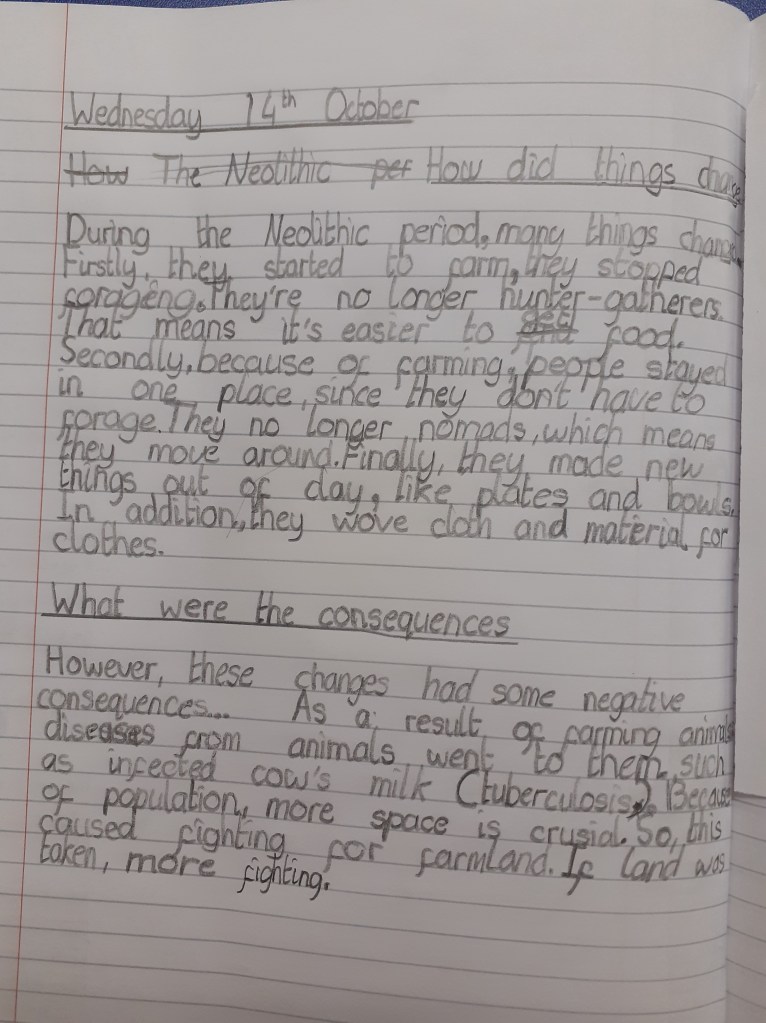
I’ve been told that teaching out of order makes it much less likely that children will develop the necessary chronological understanding. However, I think that provided we anticipate that and ensure that a variety of activities that support understanding of chronology are planned in, this problem can be avoided fairly easily. For various reasons out of our control, I’m currently teaching the Stone Age to Iron Age in Year 5, after the class covered the Anglo-Saxons and Vikings but before the Romans. Because I know that this order isn’t ideal, I’ve emphasised the chronology as much as possible while teaching, including lots of quick activities on ordering the periods of British history up to 1066, and including when each period started and ended in the knowledge organiser. My class are all confidently able to order the different periods and often refer to things they learnt about Anglo-Saxon life, making comparisons to life in the Stone Age (for example, telling me that people still used looms to weave cloth in Anglo-Saxon times when we learnt about the first woven cloth in the Neolithic period), so in practice it doesn’t seem to have caused a problem with their chronological understanding to have been taught the periods out of order.  

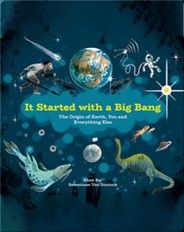
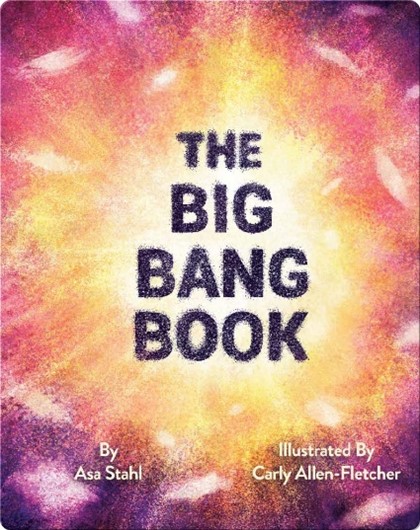
By Year 5 or Year 6, children will be ready to understand concepts that will help them to build a better picture of what was happening in the world at the time of the early Stone Age, so that they can see Stone Age Britain as part of a bigger global picture. For example, if the unit is taught after children learn about the Earth and space in science, they have some knowledge of the universe, so could understand how it began with the Big Bang, how the planets developed, and how life on Earth began. I used the following picture books from www.getepic.com, as well as Pebble in my Pocket and a toilet roll timeline in the hall, to explore this with my class.

This has prepared them really well for learning about evolution and adaptation in Year 6, as they know the words evolve and evolution and have a basic knowledge of how animals have developed from the first single cell organisms in the oceans. Alternatively, teaching the Stone Age to Iron Age at around the same time as evolution and adaptation, or after, could be equally effective. Having some knowledge of evolution should help children to understand the different types of early human that lived in Britain during the Stone Age. In contrast, in Year 3, teaching children about early humans who weren’t like us, while perfectly possible, isn’t likely to have the same significance to them. Including this level of detail about the history of the Earth may not be appropriate for the younger year group, and even if it was taught, it may not be readily remembered due to children not having the necessary prior knowledge.

Teaching the Stone Age to Iron Age after children have learnt about mountains, volcanoes and earthquakes in geography would also be desirable, because having an understanding of the layers of the Earth and continental drift would help them to understand that the physical geography of the Earth has changed over time. Knowing this, it would be much easier to grasp the idea that Britain was once connected to Europe, and that it only became an island about 8000 years ago. If children had already learnt about the concept of population density, that would be beneficial to their understanding of how different Stone Age Britain was, having such small populations for such a long period of time. Having more prior knowledge on which to build would help them to develop a much more sophisticated understanding of the changes in prehistoric Britain.

There are also significant links to science in this topic, which mean that it makes sense to teach it in Upper KS2. Knowledge of different types of rock and fossils are important to support children in understanding key aspects of the topic. Since the majority of evidence of the early Stone Age comes from fossils, or from fossils that were found with other artefacts, it’s helpful if children have some understanding of how fossils are formed. How different types of rock are formed, how objects can be preserved in rock, and the properties of different types of rock, such as chalk and flint, are central to understanding evidence from the Stone Age and the reasons why people used stone tools.

Having an understanding of different types of metal, which would be taught during the Year 5 materials science, is also key to understanding why different types of material were used for particular purposes, and the development of tools and weapons across the Stone Age, Bronze Age and Iron Age.

In my opinion, there are so many ways in which older children can build on their existing knowledge when learning about the Stone Age to Iron Age, that they outweigh the benefit of teaching all the British history units chronologically. Their greater understanding of the elements I describe in this post should mean that they are actually better able to grasp the chronological aspects of the topic, provided the need for explicit teaching of chronology is anticipated.

Here is a photo of my curriculum concepts display, showing how our learning from the Stone Age links to other concepts we have learnt.

These examples of work show how sophisticated children’s understanding of the period can be when it is taught in Year 5:

Country fact files for display

I created this resource to use in my classroom this year, and thought I’d share in case anyone else found it useful. 20 fact files including location and mainly physical geography of countries, which will be displayed around a world map. There’s a blank template too so you can add other countries to suit your curriculum. Here’s the link so you don’t have to read any more if you don’t want to.

https://www.dropbox.com/sh/tnstqduyuk3rzc4/AAAHFdbyppOPOZY4Dhg_rdAza?dl=0

I’ve chosen these categories based on my class’s prior learning and what we will be learning this year. When I teach lessons on countries, I will include more of the human geography and other aspects of the culture; this shouldn’t be seen as a reflection of our entire geography curriculum. It’s just what I’ve decided will be useful to have on the display.

Please let me know (in the comments or on Twitter) if you spot any errors, or think that something should be changed/added. I’m more familiar with some of these countries than others and want the resource to be as accurate a reflection of each country as possible.

I have to credit this fantastic post by Aiden Severs for helping me decide on the content. http://www.thatboycanteach.co.uk/2019/06/geography-key-questions-place-national-curriculum.html

How should we adapt the history and geography curriculum next year?

After my last post, I was asked what my thoughts about history and geography next year are, so I thought I’d write a new post on the topic. These are just some of my personal suggestions, and as usual I need to say that this isn’t the definitive way to approach this because every school will be different, but hopefully my advice will be useful.

My first step would be to identify which history and geography topics each class missed this year. Look at the content that is normally taught in these topics, and which National Curriculum objectives they are teaching.

When deciding how to slot in missing topics, look at two things – whether/where these objectives will be revisited during the key stage, and how essential the content is. Obviously everything we teach is important, but realistically it’s not going to be possible to fit in everything that’s been missed and still teach the curriculum as normal, so some prioritising will have to take place.

  1. Is this the only time children will be taught a particular National Curriculum objective? If yes, then it will either need to be incorporated into another topic, or the whole topic will have to be slotted in next year. This decision depends on the next point.
  2. How essential is it? Having more than a superficial knowledge of some topics is vital for future learning in the subject. For example, my class missed learning about Ancient Greece in history. This is the only time they’ll learn about this time period throughout KS1 – KS3, but having some knowledge of it is important for children who want to continue with their history studies, as well as knowledge of Greek mythology being important for later learning in English. These children can’t leave primary school without learning about Ancient Greece, so we will have to fit the topic in next year.
  3. For some areas, you might decide that it’s important to have some knowledge, but that it can be reduced so that there’s much less content than normal in order to combine topics. For example, the history bullet point in the National Curriculum which includes an overview of ancient civilisations, and a depth study of one civilisation. Although in an ideal world these would be done as two separate topics, if necessary they could be combined, with the depth study involving a couple of extra lessons rather than a whole term’s learning.
  4. If the missed learning will be built on in topics taught later in the key stage (or in KS2 for Year 2), then those topics can probably go ahead, but with the teacher being aware that prior learning was missed so that they can adapt their planning to take that into account.
  5. As I’ve explained in my previous posts, some objectives can be delivered more effectively through being revisited frequently across the year, rather than being taught only in one term. The obvious example of this would be locational knowledge in geography. For KS1 – know the four countries of the UK, their capitals and the surrounding seas, and the seven continents and five oceans of the world. For KS2 – locate the world’s countries, and cities and counties of the UK. These need lots of practice for children to remember, so the best way to ensure children achieve these objectives is to plan in plenty of short opportunities to revisit and retrieve this information. I describe ways of doing this in more detail in this post: https://mrssteaches.school.blog/2020/02/05/history-geography-curriculum-decisions-for-class-teachers-part-2/

Once you know which units you need to try to fit in in each year group, look at your normal curriculum plan for next year. Can some of the units be shortened to make room for an extra one? Reducing the number of lessons for some topics, teaching only what is absolutely essential, should allow for the content that has been missed to be included. You may need to adapt the order in which you teach certain units as well, to allow for prior knowledge being missing. For example, Year 3 missed learning about the Romans in Britain. Year 4 would normally start the year learning about the Anglo Saxons, but this will need to be adapted so that they have learnt about Roman Britain first.

Design a site like this with WordPress.com
Get started