This is the next in my series of posts about sequencing topics and how they can build on children’s prior knowledge.
As I’ve said previously, there are many ways for schools to deliver the National Curriculum, so please don’t worry if your school doesn’t teach this topic in the way I’m describing. I’m not saying there’s anything wrong with your school’s curriculum if you don’t, just giving some examples of how topics can be planned as part of a coherent and well-sequenced curriculum. Also, there are many different ways to approach each topic, dependent on what the children have already learnt. Just because I haven’t included a particular aspect doesn’t mean it isn’t valuable, and those I have chosen to include may not all be relevant for you, depending on your context.
Changes in Britain from the Stone Age to the Iron Age is one of the compulsory British history units to be taught in KS2. Many schools sequence their KS2 history curriculum chronologically, which is logical considering that we need to help children develop an understanding of chronology. However, personally I think it would be preferable to teach the Stone Age to Iron Age later in Upper KS2, rather than beginning Year 3 history with this unit. I’d still advocate teaching the rest of the British history units (Romans, Anglo-Saxons & Vikings) chronologically, but then slotting in the unit on prehistory later. This post is going to outline my reasons.
Firstly, and most simply, in Year 3 children are only just beginning to learn about 3 digit numbers. Learning about things that happened millions, hundreds and tens of thousands of years ago is going to be unnecessarily complicated with children who aren’t able to read and understand those numbers. They will clearly be better able to access timelines of prehistory if they can read the numbers on them. Also, their development of chronological understanding will be hampered by them not having sufficient mathematical knowledge to be able to comprehend the lengths of time involved in such a long period of time.
Similarly, it doesn’t seem right that children should be introduced to prehistory before they have developed an understanding of history, including the concepts of AD and BCE. How can they comprehend that prehistory came before ancient history if they have never learnt about ancient history? The majority, if not all, of their learning in KS1 will have been post-1066, so introducing ancient history in Year 3 is likely to be challenging enough, but at least there are three different ancient history units that will enable children to develop their understanding of chronology over time. Once these have been taught, asking what came before this, and explaining that there was a long period before humans learnt to write, which is called prehistory, seems to be something that will slot into existing knowledge much more easily.
I’ve been told that teaching out of order makes it much less likely that children will develop the necessary chronological understanding. However, I think that provided we anticipate that and ensure that a variety of activities that support understanding of chronology are planned in, this problem can be avoided fairly easily. For various reasons out of our control, I’m currently teaching the Stone Age to Iron Age in Year 5, after the class covered the Anglo-Saxons and Vikings but before the Romans. Because I know that this order isn’t ideal, I’ve emphasised the chronology as much as possible while teaching, including lots of quick activities on ordering the periods of British history up to 1066, and including when each period started and ended in the knowledge organiser. My class are all confidently able to order the different periods and often refer to things they learnt about Anglo-Saxon life, making comparisons to life in the Stone Age (for example, telling me that people still used looms to weave cloth in Anglo-Saxon times when we learnt about the first woven cloth in the Neolithic period), so in practice it doesn’t seem to have caused a problem with their chronological understanding to have been taught the periods out of order.
By Year 5 or Year 6, children will be ready to understand concepts that will help them to build a better picture of what was happening in the world at the time of the early Stone Age, so that they can see Stone Age Britain as part of a bigger global picture. For example, if the unit is taught after children learn about the Earth and space in science, they have some knowledge of the universe, so could understand how it began with the Big Bang, how the planets developed, and how life on Earth began. I used the following picture books from www.getepic.com, as well as Pebble in my Pocket and a toilet roll timeline in the hall, to explore this with my class.
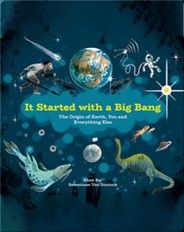
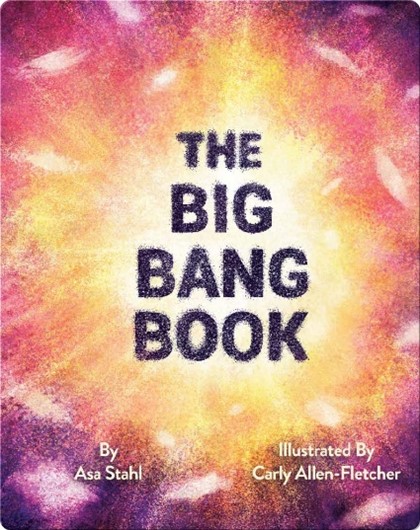
This has prepared them really well for learning about evolution and adaptation in Year 6, as they know the words evolve and evolution and have a basic knowledge of how animals have developed from the first single cell organisms in the oceans. Alternatively, teaching the Stone Age to Iron Age at around the same time as evolution and adaptation, or after, could be equally effective. Having some knowledge of evolution should help children to understand the different types of early human that lived in Britain during the Stone Age. In contrast, in Year 3, teaching children about early humans who weren’t like us, while perfectly possible, isn’t likely to have the same significance to them. Including this level of detail about the history of the Earth may not be appropriate for the younger year group, and even if it was taught, it may not be readily remembered due to children not having the necessary prior knowledge.
Teaching the Stone Age to Iron Age after children have learnt about mountains, volcanoes and earthquakes in geography would also be desirable, because having an understanding of the layers of the Earth and continental drift would help them to understand that the physical geography of the Earth has changed over time. Knowing this, it would be much easier to grasp the idea that Britain was once connected to Europe, and that it only became an island about 8000 years ago. If children had already learnt about the concept of population density, that would be beneficial to their understanding of how different Stone Age Britain was, having such small populations for such a long period of time. Having more prior knowledge on which to build would help them to develop a much more sophisticated understanding of the changes in prehistoric Britain.
There are also significant links to science in this topic, which mean that it makes sense to teach it in Upper KS2. Knowledge of different types of rock and fossils are important to support children in understanding key aspects of the topic. Since the majority of evidence of the early Stone Age comes from fossils, or from fossils that were found with other artefacts, it’s helpful if children have some understanding of how fossils are formed. How different types of rock are formed, how objects can be preserved in rock, and the properties of different types of rock, such as chalk and flint, are central to understanding evidence from the Stone Age and the reasons why people used stone tools.
Having an understanding of different types of metal, which would be taught during the Year 5 materials science, is also key to understanding why different types of material were used for particular purposes, and the development of tools and weapons across the Stone Age, Bronze Age and Iron Age.
In my opinion, there are so many ways in which older children can build on their existing knowledge when learning about the Stone Age to Iron Age, that they outweigh the benefit of teaching all the British history units chronologically. Their greater understanding of the elements I describe in this post should mean that they are actually better able to grasp the chronological aspects of the topic, provided the need for explicit teaching of chronology is anticipated.
Here is a photo of my curriculum concepts display, showing how our learning from the Stone Age links to other concepts we have learnt.

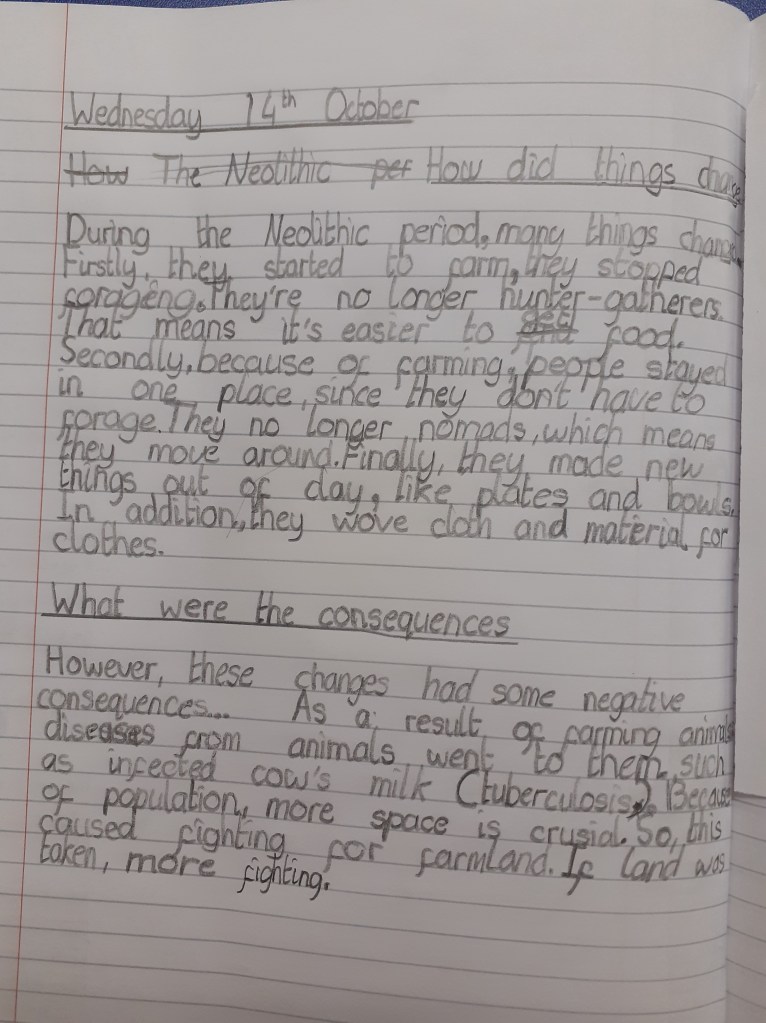
These examples of work show how sophisticated children’s understanding of the period can be when it is taught in Year 5:


Love it! Great sharing here.
LikeLike